
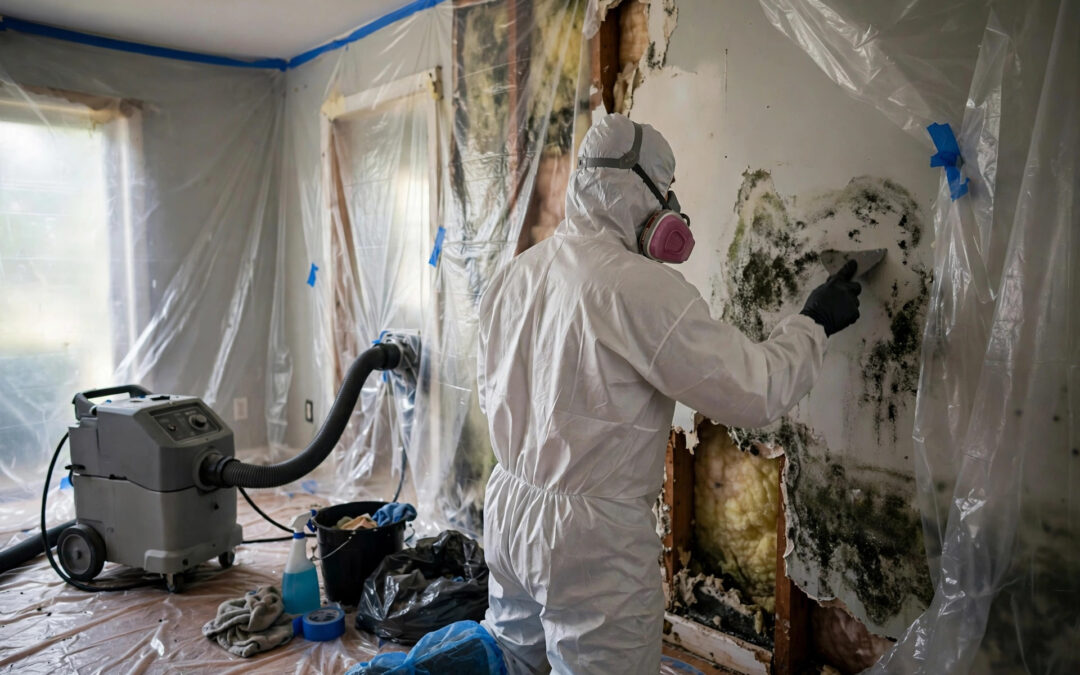
Finding mold in your home is unsettling, but the process of getting rid of it does not have to be a mystery. Professional mold remediation follows a clear, step-by-step sequence designed to remove the growth, fix the moisture problem that caused it, and keep it from coming back. Here is exactly what to expect when 411 Mold Expert handles mold remediation in your Alhambra home.
Step 1: Inspection and Testing — Before Anything Is Touched
Real remediation starts with diagnosis, not demolition. Our first step is a thorough mold inspection: we identify visible growth, look for the moisture sources feeding it, and use moisture meters and thermal imaging to find hidden dampness behind walls and under floors. When the situation calls for it, we take air and surface samples to identify the type and concentration of mold present.
This step matters because it defines the scope of the work. Treating a symptom without finding the source — say, cleaning a wall while a slow plumbing leak keeps feeding it — guarantees the mold returns. Our inspection tells us what has to be removed, what has to be dried, and what has to be fixed.
Step 2: Containment — Keeping Spores From Spreading
Mold releases microscopic spores, and disturbing a colony without containment spreads those spores through your home. Before any removal begins, we seal off the work area with plastic sheeting and create negative air pressure using HEPA-filtered air scrubbers. Air flows into the contained area but not out of it, so spores stay where we can capture them.
We also protect the rest of your home: HVAC vents in the work zone are sealed, pathways are covered, and our technicians wear full protective gear. Containment is invisible to you once the job is done, but it is one of the most important parts of the process.
Step 3: Removal and Cleaning
This is the heart of remediation. Porous materials that are heavily contaminated — drywall, insulation, carpeting — are removed and bagged for disposal, because mold roots itself into these materials in ways surface cleaning cannot reach. Non-porous surfaces like metal, glass, and tile are cleaned with professional antimicrobial treatments and HEPA vacuuming.
Every removal decision is based on the inspection findings and industry standards. We do not tear out more than necessary, and we do not leave contaminated material behind hoping paint will cover it. Encapsulation or sealing is only used on surfaces that have been properly cleaned first — never as a shortcut over active growth.
Step 4: Drying and Moisture Control
Removing mold without eliminating moisture is a temporary fix. Once the contaminated materials are out, we dry the structure thoroughly with commercial dehumidifiers and air movers, and we verify dryness with moisture meters — not guesswork. Then we address the source: the plumbing leak gets repaired, the drainage issue gets corrected, the ventilation gets fixed.
In Alhambra homes, the moisture sources we find most often are plumbing leaks (supply lines, drain lines, and water heaters), roof or flashing leaks that show up as ceiling stains, poor bathroom ventilation, and occasional intrusion from irrigation or grading issues. Whatever the source, it gets fixed as part of the job.
Step 5: Repairs and Restoration
After the area is clean and dry, the rebuild begins. Removed drywall is replaced, textures are matched, and the space is finished and painted. The goal is simple: when we are done, you should not be able to tell where the mold was. The area should look, smell, and test clean.
Step 6: Prevention — Keeping It From Coming Back
A good remediation ends with prevention. We walk you through what caused the problem and what to watch for: keeping indoor humidity in a healthy range, making sure bathroom and kitchen exhaust fans vent to the exterior, fixing plumbing drips promptly, and keeping an eye on the spots where moisture likes to hide. Mold is an opportunist — it needs moisture, food, and time. Take away the moisture and it cannot return.
Why Professional Remediation Matters
Small surface mold on a non-porous material is one thing. But mold inside walls, under flooring, or spread across a large area is a job for professionals with the right equipment, containment practices, and training. Disturbing a large colony without containment can make the problem worse and expose your household to a heavy dose of spores.
If you suspect mold in your Alhambra home, start with an inspection and let the findings guide the plan. Learn more about our related water damage and restoration services, then call 411 Mold Expert at 909.325.0020. We will find the mold, remove it properly, fix what caused it, and leave your home clean and healthy.

Recent Comments